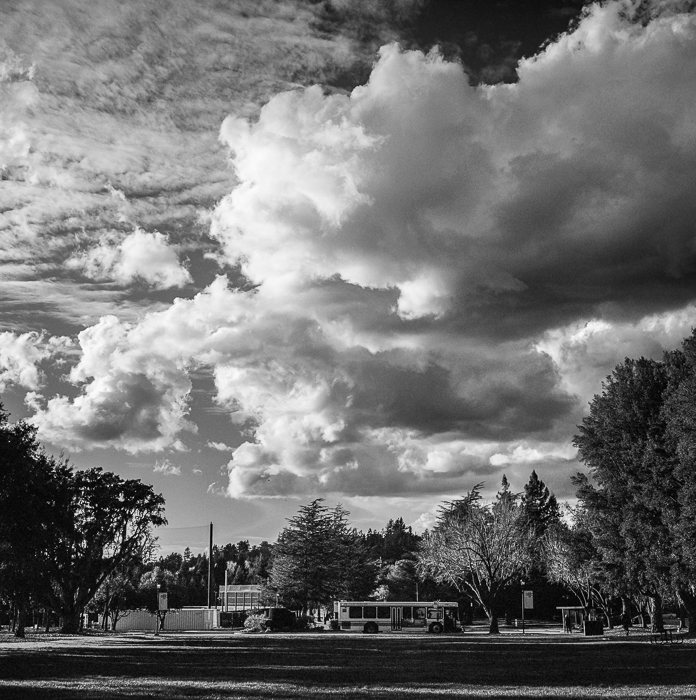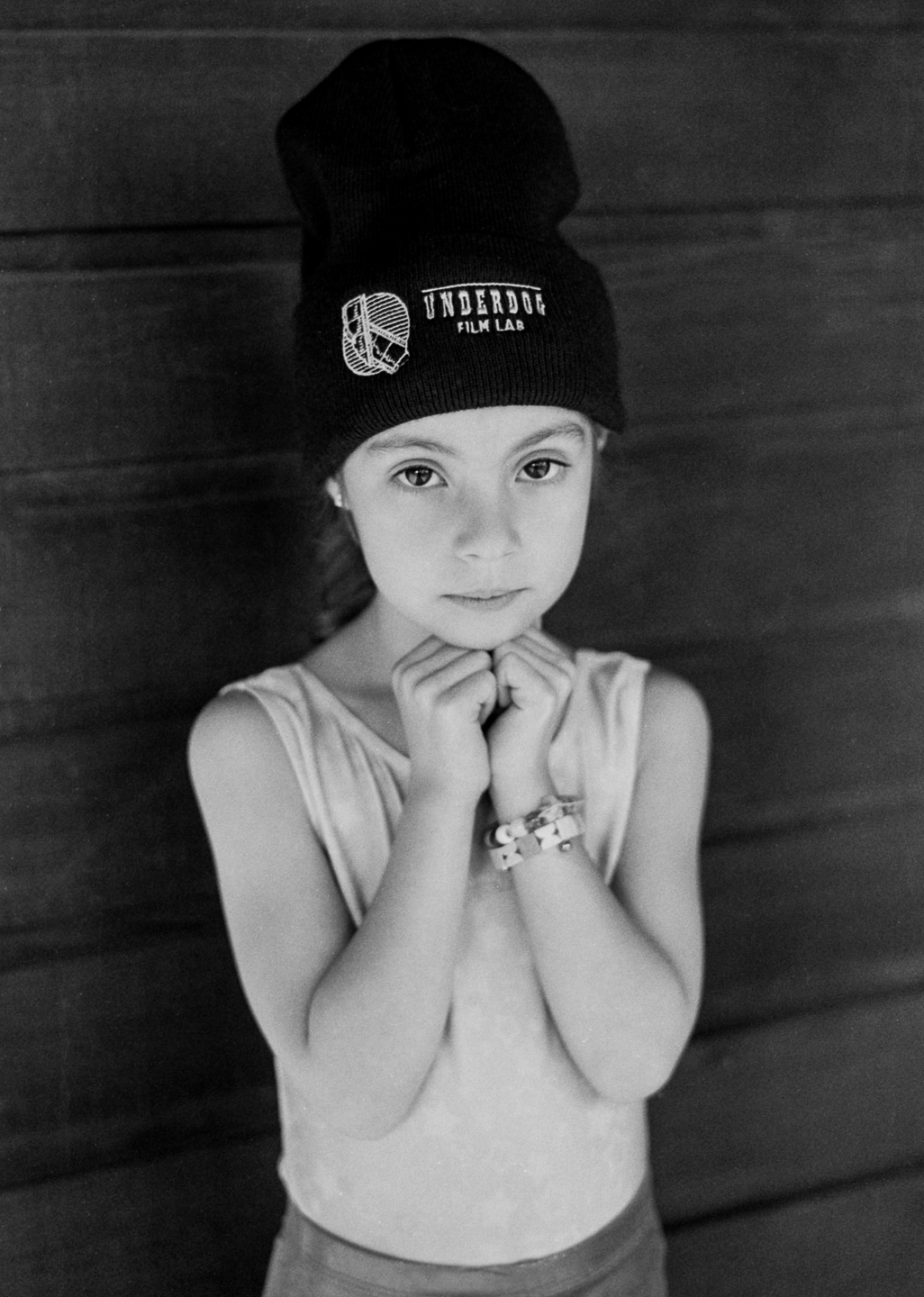
I read that piece of advice several times when I recently went back to shooting film. It’s true—when a subject is strongly lit, it’s easier to produce a black-and-white print with good contrast and details. So I’m attracted to subjects that are bright, especially if they’re surrounded by a darker background.
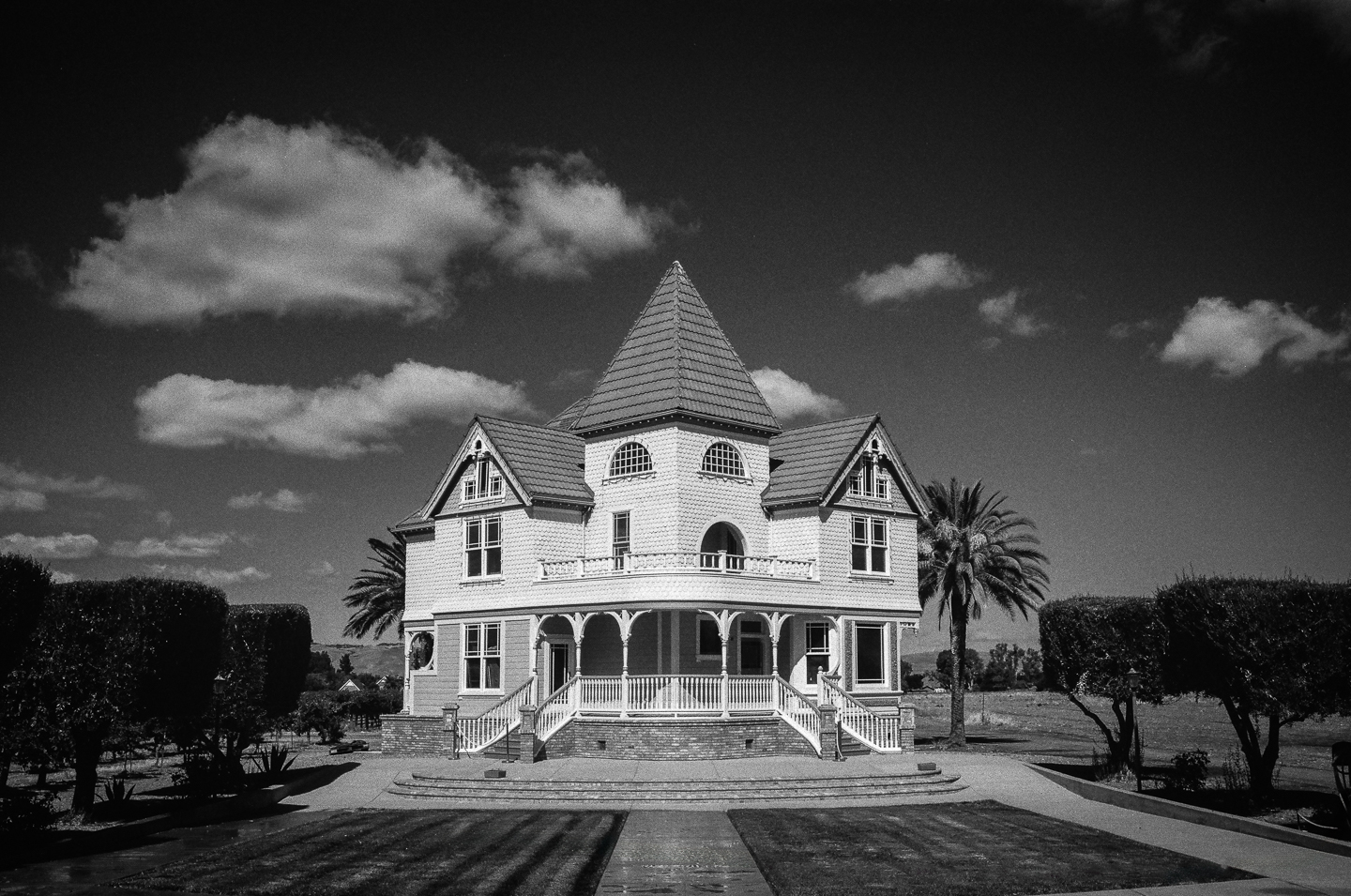
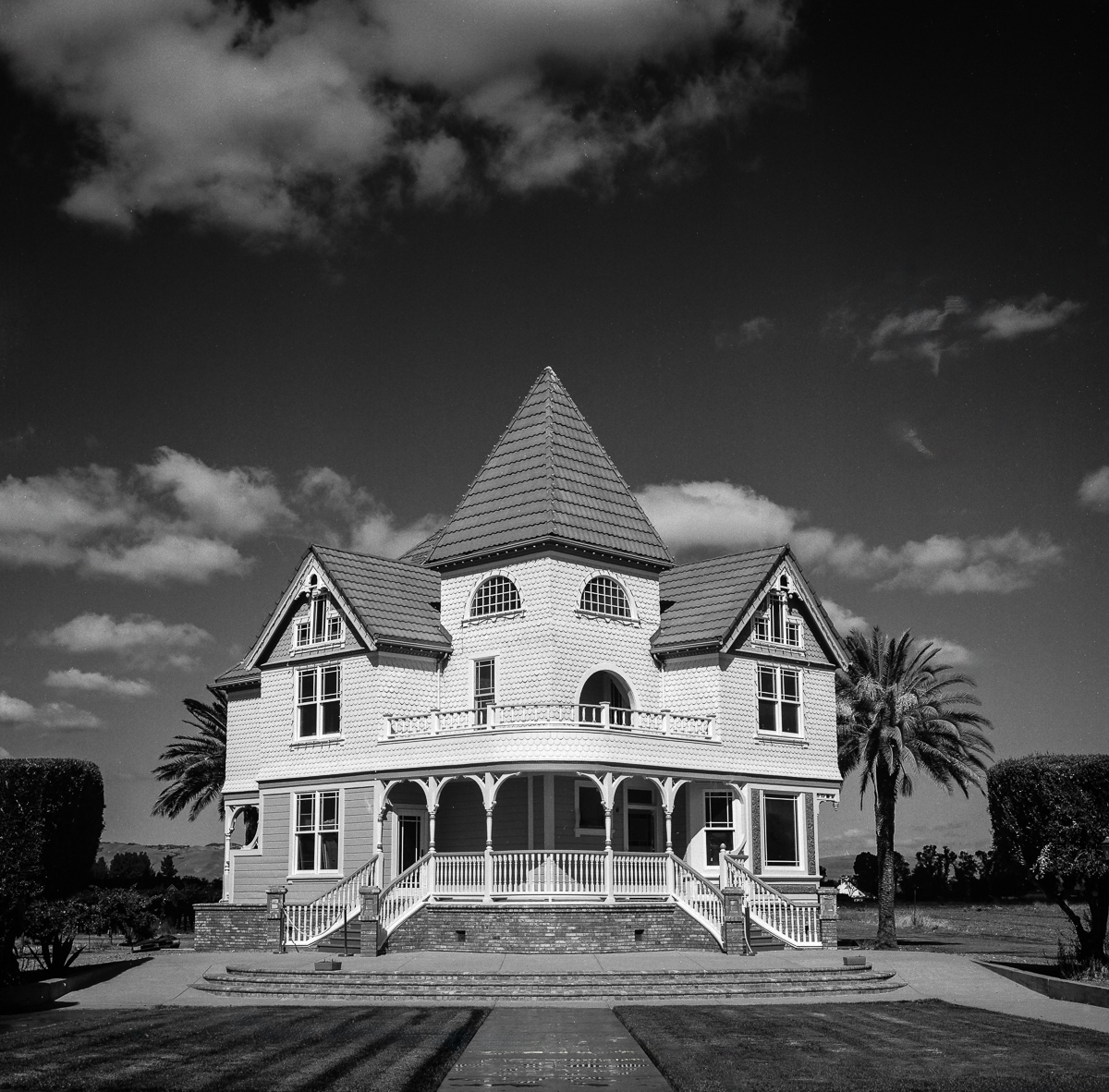
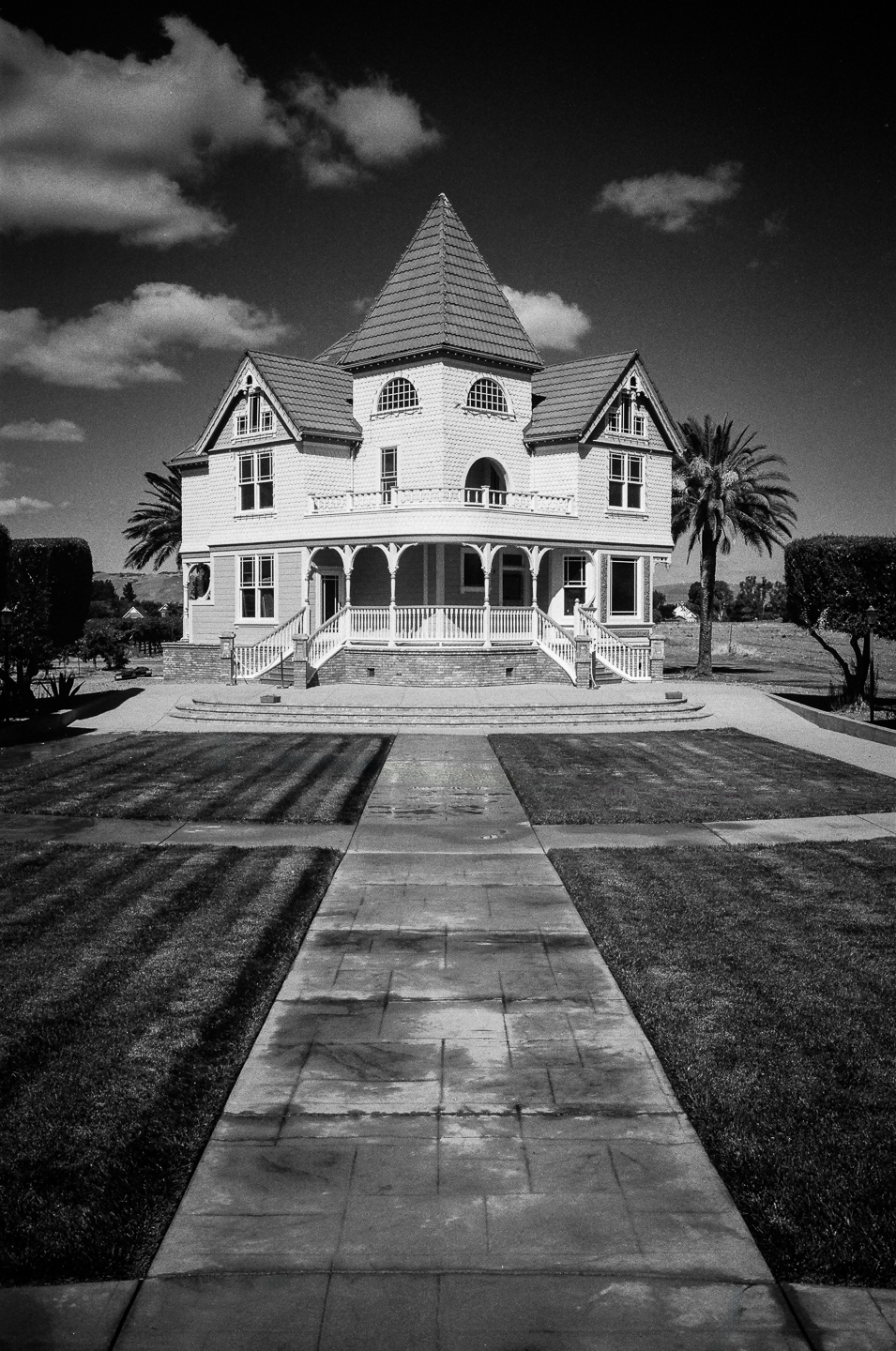
Leaving Livermore last week, I passed by this Queen Anne Victorian , the Gordon House, that I liked to photograph when I lived in Livermore a decade ago. It’s a photogenic architectural subject because, unlike a lot of architecture, it stands alone, without other buildings around it to clutter the frame. Plus, that day, the sun was shining brightly and the house, which is a tan color, was almost glowing, making it a very good subject for black-and-white film photography.
I had two cameras with me (not usually the case), so I photographed it with both: A 35mm camera, and a medium-format 6×6 camera. I had an orange or a red filter on for all the photographs to create even more contrast between the light building and the dark sky with clouds.
It may not be evident in these digital images, but there’s a clear difference in the grain between the images from the two cameras. I had the same film in both: Ilford FP4+. All the images are sharp, but there’s clearly less grain in the medium-format ones.
Here’s a 35mm image:
And here’s a medium-format image:
This is also a 35mm image, this time with a portrait orientation:
I usually won’t have two cameras with me, so I won’t be repeating this test often, but I will stay on the lookout for brightly lit subjects, because “film likes light.”